
Self-knowledge faded as Western culture fragmented, and when man split from nature, our lives fractured as well. We need a path to integration.

“Is not the love (…) of wisdom, which is philosophy” — Socrates[^1]
For thousands of years, humans have sought the meaning of life. In ancient Greece, this pursuit was called philosophia, ‘the love of wisdom’. But what the ancients held as clear truth, we have long forgotten. The truth is that what we truly seek is already here: the experience unfolding before our eyes. At its heart, the essential question has always been the same: ‘What do I truly want?’ The answer has echoed through time, just as the search has. What we all truly seek is wisdom. And that means to live a good life.
Fragmentation
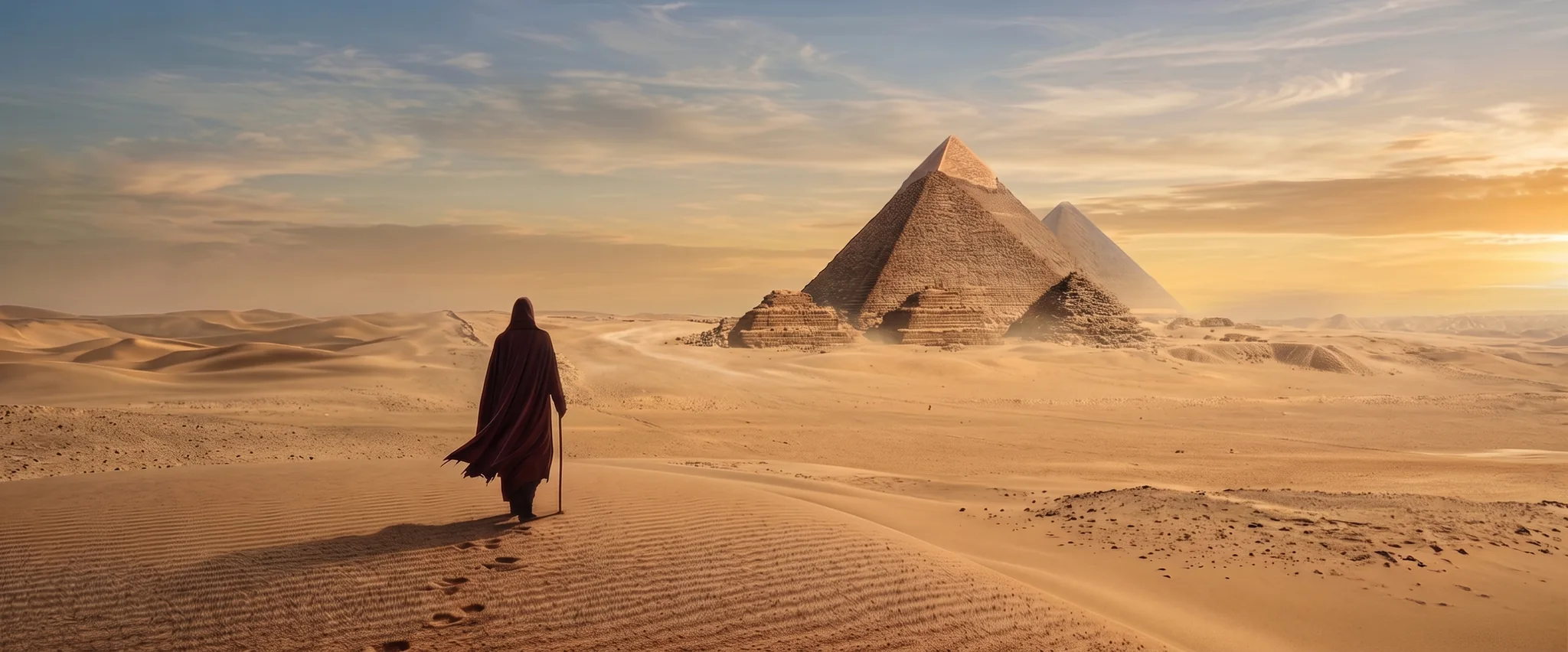
We have much to thank the ancient Greeks for. From the arts to architecture, and democracy to philosophy. In many ways, this time of roughly 480-323 BCE could be seen as the flowering of European culture. This golden age was marked by self-knowledge. This doesn’t entail that ancient Greek culture was the cleanest, richest, or the most beautiful, but that they knew who they were at their core. In contrast to the present time, there were many seekers in those days. When one would travel uphill to consult the Oracle of Delphi, the entrance of Apollo’s temple greeted them with the famous inscription carved into the stone: ‘Know Thyself.’
But just as that temple fell into ruin, our connection to those timeless questions faded over the following thousands of years. Slowly but surely, core awareness decreased as superficiality increased. As Western culture became shallower, we lost touch with the essence of life. Although there have been many awakened souls through the ages, the sad truth is that we are not a core culture anymore. Where ancient Greece was the flower, modernity has become the thorn.
One could even go back further to the Sumerians and how they influenced the Babylonians and the Assyrians and, in turn, the ancient Greeks. But that is not the focus of this article. What is important is that, as history unfolded, the culture that now dominates the entire planet has lost its core. The Scientific Revolution marks this fragmentation, combined with colonialism and later the Industrial Revolution. These forces have fractured the very fabric of human experience and, with it, the environment.
So astrology and astronomy, which were one discipline for thousands of years, became two. The same happened to architecture, once inseparable from utility and the divine, now stripped of its essence. Modernity has separated not only the sciences and arts but ultimately man and nature. Although scientific and material progress is undoubtedly useful, many now recognize the inherent flaw in reductionistic thinking. It’s as if humanity across the centuries cut out one tiny piece of the pie and utterly condemned the rest. What we’re left with is a monotonous and lifeless civilization rapidly heading for the cliffs.
Not everything, however, can be blamed on scientific rationalism. That phase was merely a wave on top of a far deeper current—the transition from a core culture to a superficial one. Core being the knowledge of who you are, and superficial being the amnesia where we find ourselves today. This has seeped so deep into our culture that it has changed and altered almost everything we stand for. And now, twenty-four hundred years since ancient Greece laid the foundations of modern civilization, we are left to navigate a splintered existence.
The pillars that have guided us throughout the centuries—whether politics, religion, or education—have never been able to reverse this split, and often increased it even further. And as the split deepens, it’s clear that no institution still offers a foundation wide enough to hold the entire spectrum of human existence. The frameworks, theories, and teachers that aim to replace these structural imbalances are usually so focused on one specific part of life that they neglect the rest. But elevating one part while ignoring others comes at a cost.
Imbalance
In our individual lives, this development has become prevalent. We now find ourselves in a time where our work has become meaningless, social life destructive to our health, and our thinking a tyrant over feeling. Life has become an endless stream of activities that share no single purpose. We’re drifting through life, consuming everything that can quench the bottomless pit in ourselves. Take away the core, and people no longer know who they are. That is why everything is going faster and faster. Controlled by appetites because we’re unable to sit still with what is. When our cores are asleep, we become fragmented.
The challenges we’re facing on a global scale are manifestations of this deep fracture. This is older than fossil fuels, the church, or even the Roman Empire. These challenges point us back towards that same question the ancients asked themselves: ‘What’s the meaning of life?’ This is not merely a question to journal about once, or to read a book on. Ask it with your whole being, your whole self. ‘Why am I here? Who am I?’ To turn back to the core is not only wise, but necessary should we wish to have a chance to survive as a species.
In all challenges lies the seed of transformation. Even though rationalism has split man from nature, we’re increasingly finding ourselves closely connected with it. It’s become obvious that humans have influence on the planet, for much has been changed and impacted by our actions. It’s even clearer that we’ve abused this power and acted out of fear. The shallow pleasures of post-modern consumerism are by many recognized as harmful. Either consciously, or more commonly unconsciously, such as through a mental health crisis, fractured relationships, or loss of health.[^2]
Bill Plotkin argues that modern Western society is pathologically stuck in a state of adolescence which he calls patho-adolescence. He captures this fracture beautifully: “As soon as enough people in contemporary societies progress beyond adolescence, the entire consumer-driven economy and egocentric lifestyle will implode. The adolescent society is actually quite unstable due to its incongruence with the primary patterns of living systems. The industrial growth society is simply incompatible with collective human maturity. No true adult wants to be a consumer, worker bee, or tycoon, or a soldier in an imperial war, and none would go through these motions if there were other options at hand. The enlivened soul and wild nature are deadly to industrial growth economies — and vice versa.”[^3]
Integration
Everything in this universe is animate. It’s such a redundant thing to say, but for post-modern bipedal monkeys it’s a hard truth to wrap their heads around. The earth, the sky, the forests, the animals, the waters, everything emanates the breath of life. Because the nature of reality is relation, one can view the fragmentation development as an adolescent game. But maturity is not to negate all that we have learned from puberty, but to integrate it. Integration means relation. It’s time we remember to measure the stars, and to let them speak to us. To build shelters not to keep nature out, but to invite her in. The only thing we have to do is to stop numbing ourselves.
Individually, we can choose to follow the call, whether it’s your Body, Mind, Matter, Relationships, Heart, Spirit, or Service that needs your attention. Go with it, wherever it may lead. Do not give in to fear. If you truly seek the meaning of your life, you will find it. But should you wish to have a chance to succeed in this quest, you’re going to need your whole self.
Integration is one of the hardest things to accomplish. It is reached by embracing rather than rejecting life. It entails so much, because who you are is so much. Your work, education, physicality, family, creativity, awareness, and your gift are all part of it. It’s rare for individuals to embody both alignment and achievement, and only when both macro-poles are in harmony can our purpose reveal itself. To know your direction is to know the core of who you are. Few in present times are there, but the number is steadily growing.
Often a breakdown is necessary before integration can occur. This time is thus a tremendous opportunity for greater wholeness. Everything expands and then contracts; this pertains to your breath, tides, and consciousness. And after so many years of fragmentation, it is only natural to find a way to integrate from all that’s been lost. This expansion is both a blessing and a curse, for we have the privilege to reinvent what it means to be a human being.
Back to the core
Unlike many modern paths, the Seven Life Areas seeks to integrate all of human experience, offering both a way toward your center and a way for your purpose to guide your life. It does not seek to replace any other structures you might be invested in, but rather incorporates them by helping you grow and serve. You can be an entrepreneur, a mother, a scholar, or any other role. As long as it’s aligned with who you are.
Everything we’ll ever need resides within ourselves; it’s all so simple if you choose to look. When you invest in yourself, you’ll become more and more alive. This is a very rebellious act, as modernity increasingly seeks to numb humanity out of fear. But if you truly commit to developing all areas of your life, you’ll be able to integrate them. The pinnacle of development is self-mastery, which means to live with alignment, achievement, and purpose.[^4] And what’s the result of becoming an integrated human? Not only a good life for yourself, but to be able to serve all of life. And when millions of humans start to reach such a state, who knows what’s possible.
Footnotes
I may earn a small commission through these links at no extra cost to you.
[^1]: The Republic, Plato. Translated by Benjamin Jowett.
[^2]: This isn’t to say that all mental health diseases or loss of physical vitality and broken relationships are the result of modernity. This is merely stating that what happens in the environment influences us, likely more than what the average person believes.
[^3]: Nature and the Human Soul, Bill Plotkin, 2008.
[^4]: See Mastery for more explanation on the three foundations.
Related articles

Explore Seven Life Areas


Support 7LA
If you gain something here, consider giving back.